What’s Customer Data Really Worth?

What’s Customer Data Really Worth?

Measure the value of your data based on the outcomes it generates - internally and across the industry.
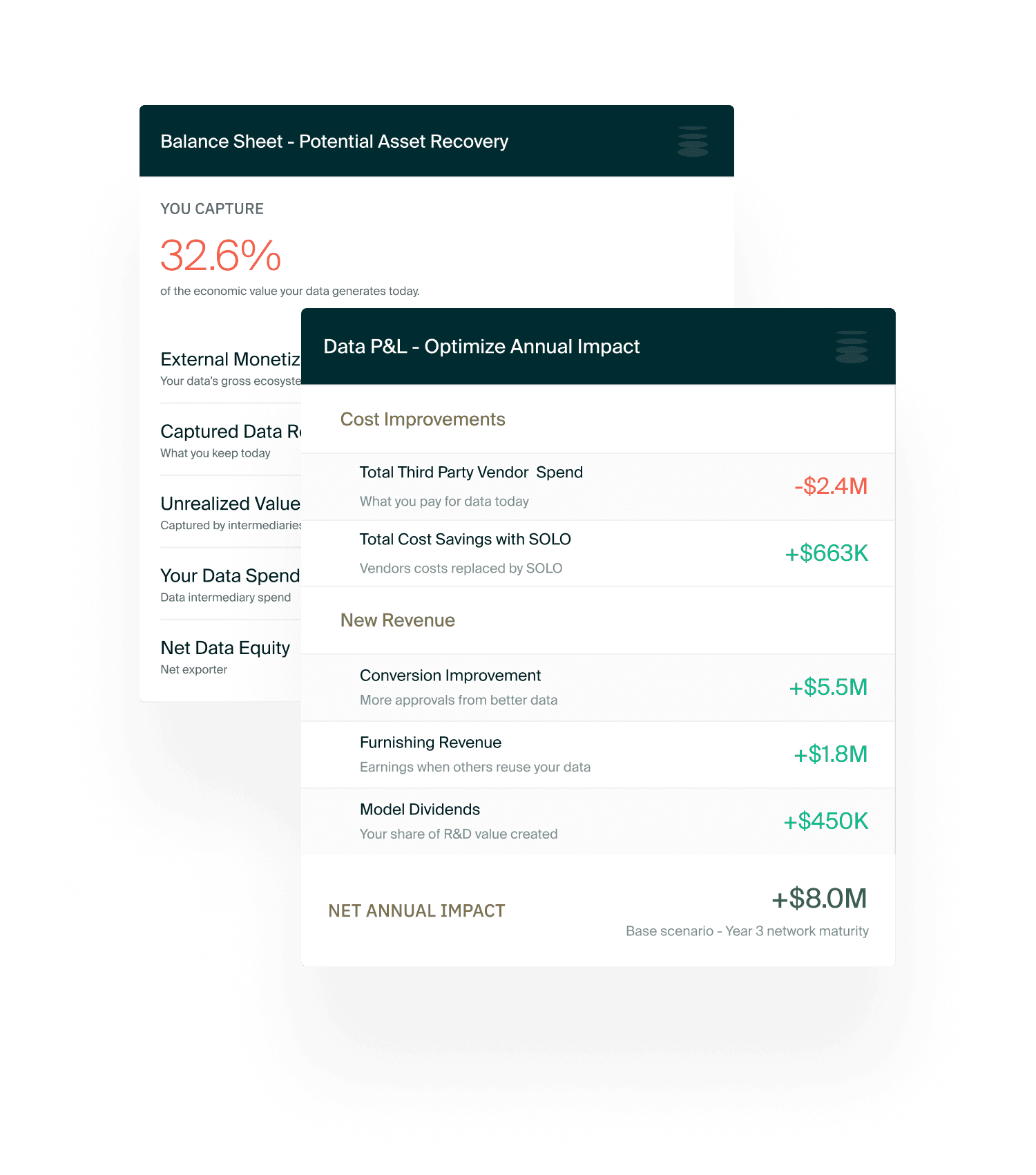
Generate Business Case

Generate Your Business Case

SOLO’s ROI Model treats data as an asset with values tied to outcomes. Data shifts from operating cost to revenue opportunity.

Balance Sheet

Estimates your total potential asset recovery vis a vis market share.
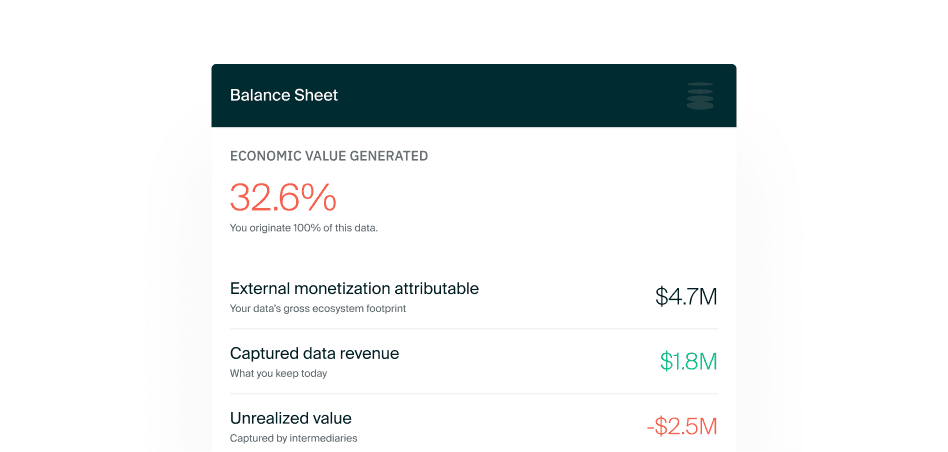
Model Inputs

Current 3rd Party Monetization

Current Realized Value

Dividend Opportunities with SOLO

Calculates

$ Total Data Value Across Industry

% of Value You Capture Today

$ Potential Asset Recovery

Data P&L
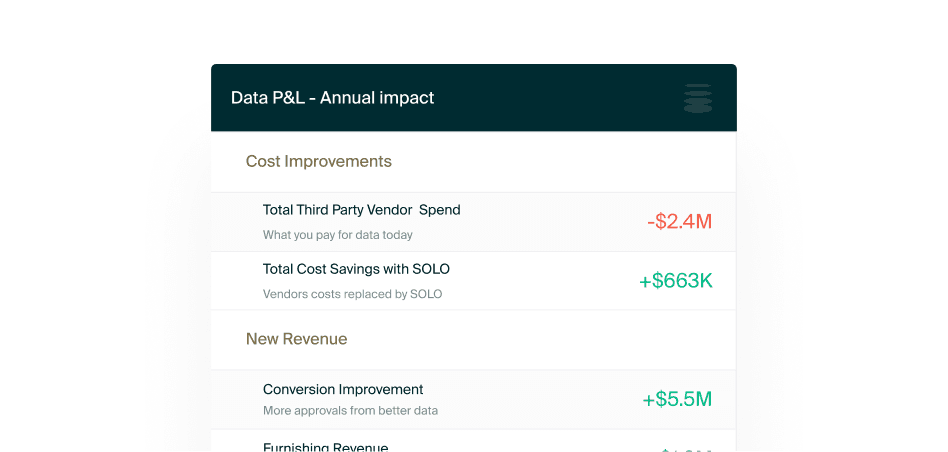
Estimates your net opportunity vis a vis your operations.

Calculates your data efficiency vis a vis the outcomes you generate today within the bank.

Model Inputs

# Applications per Product

# Active Accounts per Product

$ Vendor Spend per Product / Policy

Calculates

$ Cost Savings by Data Type & Product

$ New Revenue by Data Type & Product

$ Net Business Opportunity

How the Data Financial Statements are built.

01

01

01

Configure Estimates

Input current data spend, application volumes, and average cost per application.

02

02

02

Size Opportunity

SOLO estimates total potential asset recovery vis a vis market share.

03

03

03

Calculate P&L

SOLO estimates potential savings + new revenue by product & data types.

04

04

04

Generate Statements

View estimated statements. Connect systems & contracts to monitor

Deep Dive into the Data Financial Statements

Still have questions? Ask SOLO during a complimentary consult.

How is the opportunity sized?

How big is the market? — Estimate the total revenue external vendors earn across all financial data queries happening in the market, by data type.


What is the institution's share? — Based on the institution's active account base, calculate what percentage of the total market data supply originates from its customer relationships.


What is the gap? — Multiply the institution's market share by total vendor revenue to get the dollar value its data generates for the ecosystem. Compare that to what the institution actually captures (almost always zero). The difference is the unrealized opportunity.

What data types are accounted for in the model?

How is data monetized to generate new revenue?

How do the Balance Sheet and Data P&L build a business case?

How is the opportunity sized?

How big is the market? — Estimate the total revenue external vendors earn across all financial data queries happening in the market, by data type.


What is the institution's share? — Based on the institution's active account base, calculate what percentage of the total market data supply originates from its customer relationships.


What is the gap? — Multiply the institution's market share by total vendor revenue to get the dollar value its data generates for the ecosystem. Compare that to what the institution actually captures (almost always zero). The difference is the unrealized opportunity.

What data types are accounted for in the model?

How is data monetized to generate new revenue?

How do the Balance Sheet and Data P&L build a business case?

How is the opportunity sized?

How big is the market? — Estimate the total revenue external vendors earn across all financial data queries happening in the market, by data type.


What is the institution's share? — Based on the institution's active account base, calculate what percentage of the total market data supply originates from its customer relationships.


What is the gap? — Multiply the institution's market share by total vendor revenue to get the dollar value its data generates for the ecosystem. Compare that to what the institution actually captures (almost always zero). The difference is the unrealized opportunity.

What data types are accounted for in the model?

How is data monetized to generate new revenue?

How do the Balance Sheet and Data P&L build a business case?

How is the opportunity sized?

How big is the market? — Estimate the total revenue external vendors earn across all financial data queries happening in the market, by data type.


What is the institution's share? — Based on the institution's active account base, calculate what percentage of the total market data supply originates from its customer relationships.


What is the gap? — Multiply the institution's market share by total vendor revenue to get the dollar value its data generates for the ecosystem. Compare that to what the institution actually captures (almost always zero). The difference is the unrealized opportunity.

What data types are accounted for in the model?

How is data monetized to generate new revenue?

How do the Balance Sheet and Data P&L build a business case?

Turning Data Collection from Cost to Asset

Turning Data Collection from Cost to Asset

Turning Data Collection from Cost to Asset