- Sub-metric · What's measured
Agent access
Steps where the agent hit a CAPTCHA, bot wall or “unusual activity” block, out of total steps
- Score
3 / 5
- Why this score — And not more
- No CAPTCHA or bot wall on Capital One's own pages, but the agent was stopped at several steps: Google rejected a saved password, blocked sign-in and sent a security alert; Rippling and Ramp were unreachable as integrations to provide information to the agent; and the session timed out about seven times, each forcing the human back in. Blocked repeatedly, but not on most steps. A 4 allows one block; a 5 none.
Business
Capital One's Agent Conversion Scorecard
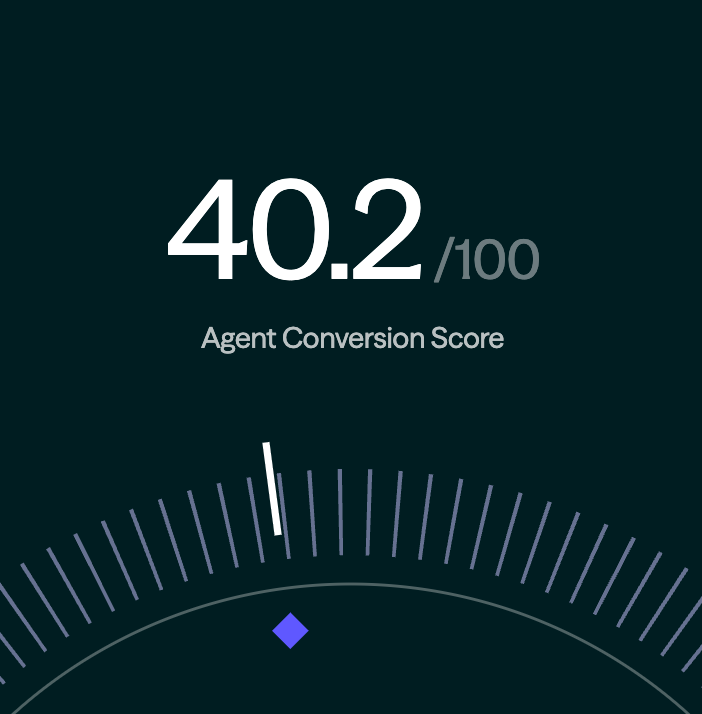
Capital One scored a 41 / 100 for agent UX conversion on its business bank account application when completed by Instinct, a text-based personal AI agent.
Why SOLO Scores
SOLO helps banks and fintechs prepare their applications for an agentic ecosystem — one where customers increasingly send a personal agent to open accounts, supply documents and answer follow-ups on their behalf. Most agentic-identity work today hands the agent a credential and assumes it can show up at the bank and act as the human. We believe that is not enough: the application itself has to recognize the agent, guide it to the right sources, scope what it may do, and keep the human in control of what gets certified. This scorecard measures how an institution's application holds up when an agent is in the loop — where it blocks, where it loses progress, and where it leaves the customer without a record. The findings inform how SOLO designs agent-ready, high conversion onboarding experiences.
What’s behind the score.
An application quoted at 15 minutes for a normal user took close to 4 hours for an agent and ended in a denial with no reason given. The agent was not the weak link: it refused to enter anything it could not verify and caught a document conflict the humans had missed. The points were lost in everything around it — sign-in walls that pulled the human back in, sessions that expired on every wait, a UX that could not handle delegation to multiple parties: in this case, a second beneficial owner who could not be handed her own steps, so sensitive data was shared between applicants with no safe lane native to the application UI.
hours to complete application
Agent Access & Effort
session timeouts and full restarts, every wait restarted the loop
Continuity & Delegation
agent-identification checks met: no policy, no self-ID, no visible delegation
Authority & Trust
Denied
with no reason, no status along the way, no record of what was submitted
Review & Outcome
Methodology
On October 29, 2026, a company's controlling officer used Instinct — an iMessage-based personal agent with access to her email, drive and password vault — to complete a Capital One business account application. The company's primary beneficial owner, holding more than 25%, was required to take part and verify herself with her own personal information, and brought her own agent to do it. This is the most common shape of a business application: not a sole proprietor, but an officer entrusted with the company's finances who needs at least one other owner to contribute. Our methodology tested the path where a person opens the bank's application and brings their agent in to help. It did not test the open-ended path where an agent is told “go get us a bank account” and chooses the bank itself. SOLO reviewed the application across four categories weighted for an agent-assisted applicant: Agent Access & Effort (30), Continuity & Delegation (25), Authority & Trust (25), and Review & Outcome Transparency (20). Each sub-metric is scored 1–5 against a fixed rubric from the agent's transcript, the human's notes and the institution's own messages; category totals are weighted into the score out of 100.
Full Scorecard
23 SUB-METRICSOpportunity
Highlights
Wins, losses, and what the network would fix.
- Category
Agent access & effort
- Wins
- No CAPTCHA or bot wall on Capital One's own pages. Document uploads worked when the agent supplied them, and the agent reviewed them well enough to catch an LLC / C-corp conflict between the EIN letter and the articles that the humans had never noticed.
- Losses
- 0% prefilled and no connections offered. Blocked by third-party sign-ins (Google, Rippling, Ramp). At least four requirements surfaced mid-application against a 15-minute estimate. The beneficial owner retyped her SSN, and it had to pass through the officer's vault to be usable.
- Opportunities
- An aggregate summary on landing — what's on file to confirm, what needs consent, what to connect, what to fill in, what can be delegated — with one delegation prompt that tells the agent where to look. A secure lane that accepts an SSN from a vault for a stated purpose, never retyped.
- Category
Continuity & delegation
- Wins
- No follow-up requests after submission — though only because the application was denied outright rather than worked.
- Losses
- About seven timeouts, each losing progress. The human was pulled back in well over six times. The beneficial owner's steps could not be routed to her or her agent — the link failed across accounts — and nothing could be parked as pending or nudged later.
- Opportunities
- Resumable sessions that tolerate agent and human wait time. Steps routed to the right person or their agent with links scoped to the recipient, not the sender's account. COLLECT components that travel into a text thread, email or agent chat, with nudges for delayed items like an EIN letter.
- Category
Authority & trust
- Wins
- The agent would not fabricate: it refused a placeholder owner, held the line when told to submit, and surfaced three discrepancies before submission. The final certification stayed with the human.
- Losses
- No policy, no self-identification, no visible delegation. Submit was never clearly routed to the human — the agent held back by its own choice. Blanket terms only; no per-pull consent, no view of what was shared, no way to revoke it.
- Opportunities
- Let the agent identify itself and show the delegation to the customer. Route submit, sign and fund to the human by rule, with per-action agent permissions. Treat agent accuracy as a trust signal: ask the agent what it knows, reconcile against verified records, and track the delta over time.
- Category
Review & outcome
- Wins
- The decision arrived within one business day.
- Losses
- No review screen from the bank; the only summary was the agent's PDF, produced on request and too long to read. No status until the denial, no record of what was submitted, and no reason for the outcome or for any of the timeouts.
- Opportunities
- A live preview review in the real form — what the agent entered, what changed, what's unverified — with direct edits and a required human approval to submit. An audit trail of each answer, its source and who provided it, plus live status the human and their agent can both check.