Skip to content

Replace repetitive workflows with reusable network memory.

  • Book a consultation
  • Fast Pass
  • Issue Credentials
  • Model Building
  • Query API
  • Index Microservice
  • Collect SDK
  • Furnish API
  • Documentation
  • Company
  • Blog
  • Templates
  • KYC Certificates
  • KYB Certificates
  • Confirmed Fraud Attributes List
  • Known Bad Actor List
  • Fintechs
  • Sponsor Banks
  • Banks
  • AI Builders
  • Account Opening & Onboarding
  • Fraud Prevention / BSA & AML
  • Financial Assessment
  • Terms of Service
  • Privacy Policy
  • Trust Center

© SOLO FINANCE INC. 2026

Products

  • Fast Pass
  • Issue Credentials
  • Model Building

Platform

  • Query API
  • Index Microservice
  • Collect SDK
  • Furnish API
  • Documentation

Resources

  • Company
  • Blog
  • Templates

Templates

  • KYC Certificates
  • KYB Certificates
  • Confirmed Fraud Attributes List
  • Known Bad Actor List

Solutions

  • Fintechs
  • Sponsor Banks
  • Banks
  • AI Builders
  • Account Opening & Onboarding
  • Fraud Prevention / BSA & AML
  • Financial Assessment

Legal

  • Terms of Service
  • Privacy Policy
  • Trust Center

What we do

  • Fast Pass
  • Model Building
  • Issue Credentials

Reliance Products

  • KYC Certificate
  • KYB Certificate
  • Confirmed Fraud Attribute List
  • Known Bad Actor List
View All

Platform

  • Query API
  • Index Microservice
  • Furnish API
  • Collect SDK
  • Documentation
NewsWhy 100+ community banks backed SOLO

BY INDUSTRY

  • Fintechs
  • Sponsor Banks
  • Banks
  • AI Builders

BY USE CASE

  • Identity Verification
  • Fraud Prevention / BSA & AML
  • Financial Assessment
  • Ongoing Monitoring

Case Study

The Conversion Scorecard: How SOLO Optimizes Conversion Across the Industry

Output:Pre-Filled UISteps Skipped

Explore

  • Company
  • Blog
  • Templates
  • Data P&L
Georgina M.Founder & CEO

LEARN

How SOLO works
network member examples

Explore

SOLO’s Open Banking Network

Book a consultation
  1. Blog

CIP Reliance Pilot Capstone Report

Network architecture & pilot findings

Sep 29, 2026
SOLO Reliance Pilot Capstone Report
SOLO Team
by SOLO Team

Share

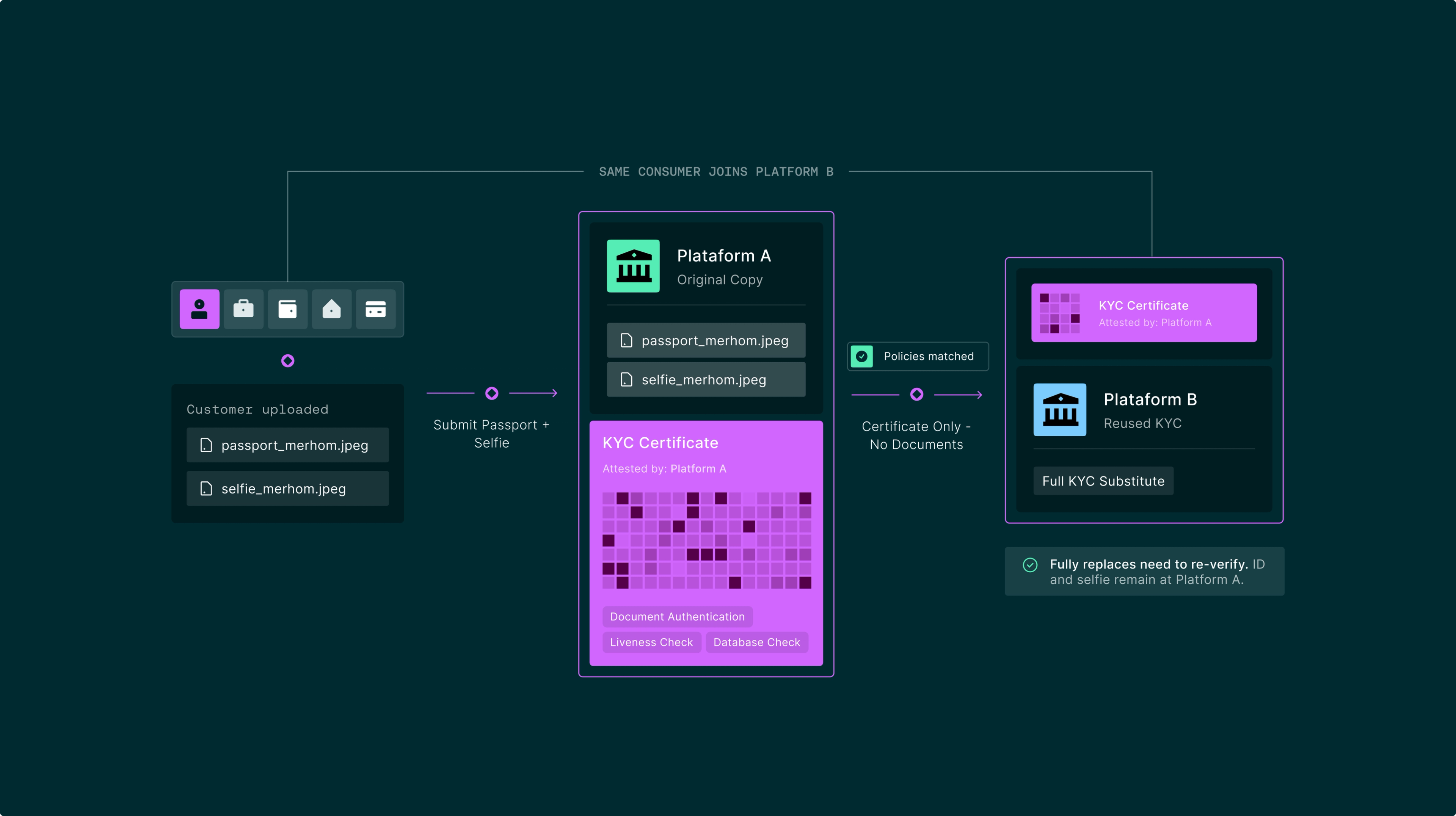
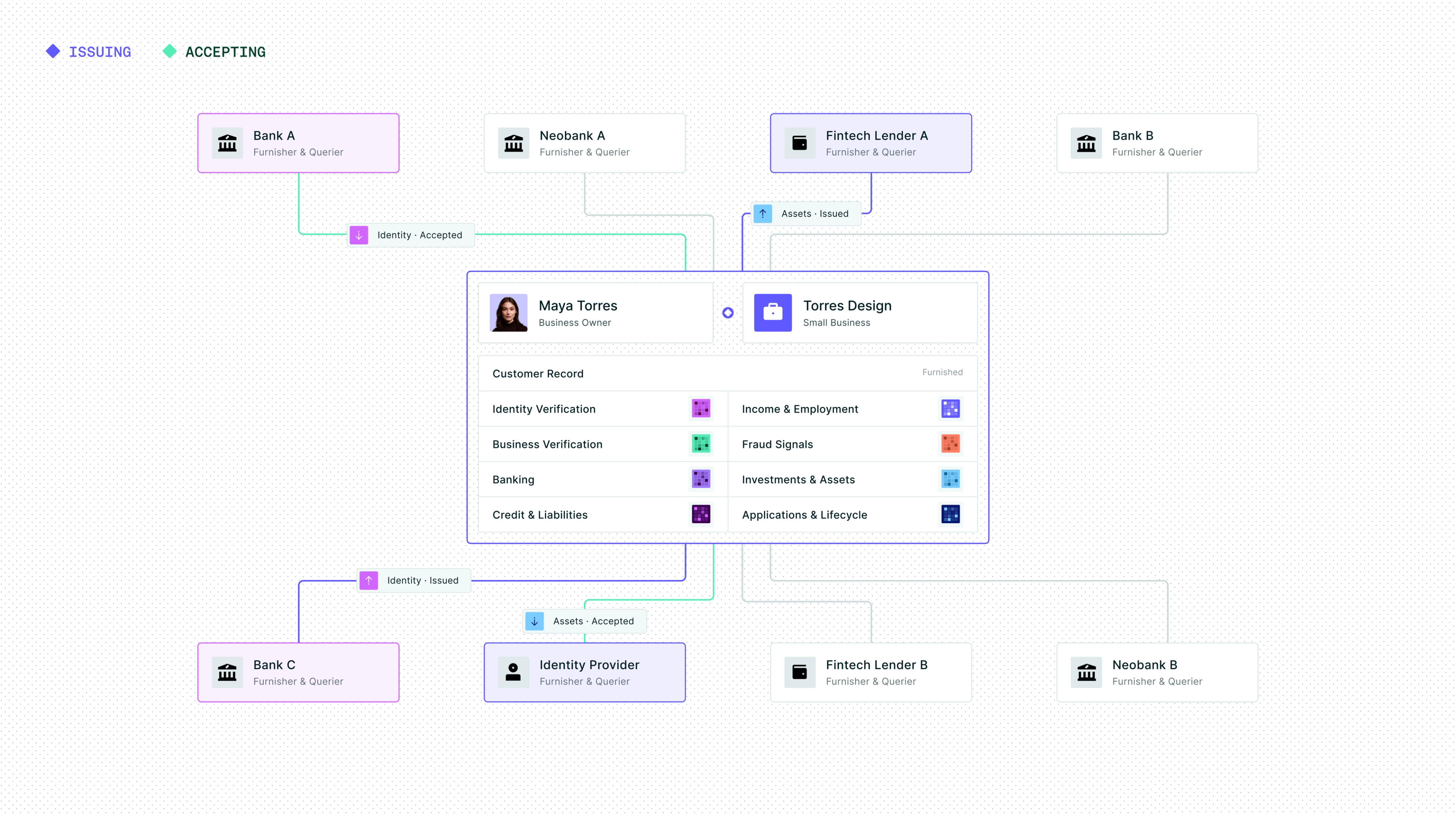
In Q1 2026, SOLO launched a pilot with sponsor banks and their fintech partners. The goal was to operationalize CIP Reliance, the provision of the 2003 CIP Rule that lets banks rely on each other's identity verification, at network scale. This capstone reports what the pilot found, and how SOLO's network architecture addresses these gaps between verification issuers and relying parties.

Download Capstone

Read the full findings from SOLO's CIP Reliance Pilot
Related articles.

SOLO's Graph QL
BlogSep 28, 2026

SOLO Network Releases GraphQL for Reusable Verification & Customer Permissioned Data

Scorecard for Business Banking Fintechs Ranked on Conversion
BlogSep 17, 2026

Business Banking Conversion Scorecard: Full Rankings (Updated)

diagram of how a KYC credential prevents duplicate ID document storage
BlogSep 14, 2026

KYC Credentials: Proof Without the Passport

What's covered in the findings:

  • The policy-to-execution gap of CIP reliance as it currently operates in sponsor bank x fintech relationships: sponsor banks' CIP policies were examiner-approved, yet their fintech partners didn't always perform the steps those policies required. The report explains why these gaps are operational rather than flaws in policy design.
  • The regulatory stakes for CIP reliance: how that gap relates to the OCC and FDIC's August 2026 final rule defining "unsafe or unsound practice."
  • Why attestation of a completed policy alone falls short for true reliance: a relied-upon party saying "CIP was completed" with certificate doesn't tell the relying bank what was done, how, or to what standard.
  • Three new network mechanisms to close the existing gaps in reliance policy vs. operational reality: independent verification of furnisher execution, standardized classification of verification provenance, and a network-level audit framework.
  • Operational controls a reusable identity network must account for: substep-level furnishing and querying, freshness requirements, integrity and synthetic-identity checks on composite certificates, liability allocation, and independent standards governance.
  • The regulatory verdict on a reliance network: why the three prongs set in 2003 are sound, and why no new legislation or rulemaking is required to operationalize reliance at scale.

What the findings mean for the industry:

  • Reliance can scale today. The 2003 framework already supports a multilateral network, so institutions don't need to wait for new legislation or rulemaking.
  • Credentials issued based on attestations alone is a risk. A stated "CIP complete" doesn't show what was done or how. Relying institutions need evidence of execution at the level of each verification step in order to rely on work they did not complete themselves.
  • Sponsor banks face a live exposure without the controls inherent in the reliance network architecture. A gap between an examiner-approved policy and what a fintech partner actually performs can now be treated as an unsafe or unsound practice. An evidence-backed record of each verification step closes that gap.
  • Banks keep their own standard. Reliance doesn't require a new industry standard. Each institution's examiner-approved CIP policy stays the benchmark for what it accepts.
  • The CIP reliance model reaches beyond banks. FinCEN has carried the same three-prong structure into proposed CIP rules for investment advisers and stablecoin issuers, so the approach applies as those industries come under CIP.
  • Verification can be done once and reused across financial services. Verification performed once, with evidence behind it, can serve every institution a customer touches instead of being repeated at each one.

Download the capstone report below to read SOLO's full findings.