BlogSep 28, 2026
Results from SOLO's Conversion Scorecard, ranking conversion across six consumer deposit products at top banks and fintechs.
Diagnose friction, optimize conversion.
SOLO scored the onboarding experiences of six consumer deposit accounts for customer conversion: JPMorgan Chase, PNC, Bank of America, SoFi, OnePay and Current. Our findings highlight just how wide the customer experience gap is, or isn't, between legacy banking providers and fintechs.
The question going into this cohort was simple: how big is the gap in user experience to open an account between legacy banking and neobanking.
We scored six consumer deposit products against SOLO's Conversion Scorecard, our rubric for diagnosing how close a bank or fintech is to the best possible conversion on a digital account opening user experience.
Just like the Business Banking Scorecard, the Consumer Scorecard scores across four categories:
The best in class to poor scoring thresholds, scored on a 1 and 5 band for each subcategory item, are adjusted to account for the consumer workflow as opposed to the complexity of a business banking application. Download our full rubric here.
The Scorecard measures conversion as more than the application form itself. The biggest drivers of a score are in the User Effort Category: total data fields requested, the amount of manual data entry required, and the total time to complete the application plus any follow-up task required before the account is actually active.
In consumer deposits, that means funding the account factors into the score. An approved account is not a converted account. If the customer has to leave the application flow, connect an external bank, or key in a debit card before money moves, that work is reflected inside the score.
We also score the customer experience on outcome transparency, because a consumer isn't going to complete an application that doesn't earn their trust along the way. Brand affinity, while potentially motivating to consumers for conversion, is not what this score measures. Instead, the scorecard quantifies the outcome transparency that shows up inside the application itself:
As a CRA built to give consumers agency over their own records where those records drive financial outcomes, we recognize this is the part of the conversion experience that operators are liable to uphold, but is often overlooked.
SOLO scored the following banks and fintechs as the first cohort in the Consumer Deposits Category:
| Provider | Score |
|---|---|
| Current | 86% |
| SoFi | 81% |
| Bank of America | 77% |
| OnePay | 74% |
| JPMorgan Chase | 72% |
| PNC | 68% |
We expected all three fintechs to rank significantly above all three banks. That isn't what happened in practice with real consumers. The exception opens a much bigger conversation about what delayed friction actually means for conversion.
How each provider scored across categories:
| Provider | User Effort (40%) | Application Time (20%) | Decision Speed (25%) | Outcome Transparency (15%) |
|---|---|---|---|---|
| Current | 40/50 | 9/10 | 10/10 | 11/15 |
| SoFi | 39/50 | 7/10 | 10/10 | 11/15 |
| Bank of America | 36/50 | 6/10 | 10/10 | 11/15 |
| OnePay | 38/50 | 9/10 | 6/10 | 11/15 |
| JPMorgan Chase | 33/50 | 6/10 | 10/10 |
And here is the gap that decided the category — the distance between an approved account and an active, fully converted user:
| Provider | # of Fields | # of Screens | Time to Approved | Time to Fund |
|---|---|---|---|---|
| Current | 9 | 3+ Funding | 2:10 | 5:03 |
| OnePay | 10 | 4 + ID and selfie capture | 3:00 | Never funded |
| SoFi | 15 | 9 + integration | 4:38 | 8:40 |
| Bank of America | 21 | 6 + 1 to fund | 9:01 | 11:40 |
| JPMorgan Chase | 19 + 6 to fund | 12 + a second device + 6 |
Current's application is one of the highest conversion experiences we have enjoyed doing out of everyone reviewed so far.
The application itself took two minutes and ten seconds flat, across nine fields:
No document uploads. No biometrics. Funding added a routing and account number and roughly another couple of minutes to manually set up direct deposit inside a payroll provider, bringing first click to funded account to a total of 5:03 and eleven fields.
That manual direct deposit setup is the one place Current gave points back. The direct deposit connector was limited enough to require a manual connection, and the manual fallback added friction to an otherwise frictionless series of screens. It's why Current scored a 4 rather than a 5 on Application Time. It's also the difference between an 86 and a near-perfect score.
Current was also the only application that moved us off desktop and asked us to finish on our phone. On paper that's a drop-off risk — you're sending a customer to a second device while they're already sitting in your flow on the first one. It paid off anyway. The text with the application link was quick and easy to use, and it was the only mobile banking app we downloaded out of the entire cohort, because the app was already a native part of onboarding rather than a post-approval suggestion. Not accounted for in the Scorecard but worth mentioning: this prompted our test user to fully adopt the product into their habits of their daily financial life.
Current also posted the only perfect Clarity of Approval score in the cohort. Throughout the application, Current made it clear when it was asking for something that might affect eligibility, so the customer can see how their record is being used to determine a financial outcome. We can't say this definitively from the applicant's seat, but based on how that language was presented, we'd expect their adverse actions to be just as useful to a customer trying to improve their financial position.
OnePay's application was, on its own terms, excellent. Three minutes to an approved screen, including a government ID capture and a selfie biometric check. That made it the fastest application in the cohort that included a true KYC check.
Then the customer exited the application and reached their mobile banking without ever funding the account.
Bypassing funding left an outstanding task sitting between the approval and a usable account. It extended total time, added points for a follow-up task, and cost OnePay what would otherwise have been a photo finish with Current for the top spot.
The economics are worse than the ranking. If that customer never comes back to fund, this is an account that has been fully KYC'd, absorbed the full cost of onboarding, and ends in a closed account. Compounded across a user base, that's a hole in the funnel that no application speed record can cover.
Contrast Bank of America. They were the anomaly of this group: the only provider that did not offer a third-party integration, even as an option, to connect an external account for funding. Their debit card entry added four fields of manual data entry, and it still won them back both time and points.
Their approach has a real limit. A debit card requirement doesn't work for a brand new customer who doesn't already have one. But for everyone switching an existing account over, this "old school" choice was the more efficient path to a funded account without ever leaving the BofA interface.
What we hope operators take from this: the removal of immediate friction isn't a removal, it's a delay. And that delay can compound into total drop-off if you aren't strategic about the customer's outcome, not just getting them through top of funnel account opening.
PNC lost this category to a version of the same problem that cost OnePay the win.
The option to fund the account through an open banking provider failed repeatedly, and there was no clear backup path to add a bank account manually. The customer confused and frustrated on their next step to fund the account and eventually dropped off. The account ended up closing within 60 days.
Conversion never truly happened. The delayed follow-up simply remained an outstanding task, waiting on a customer who had already decided to leave.
The objective of the Scorecard is to help operators diagnose, benchmark, and optimize their own conversion.
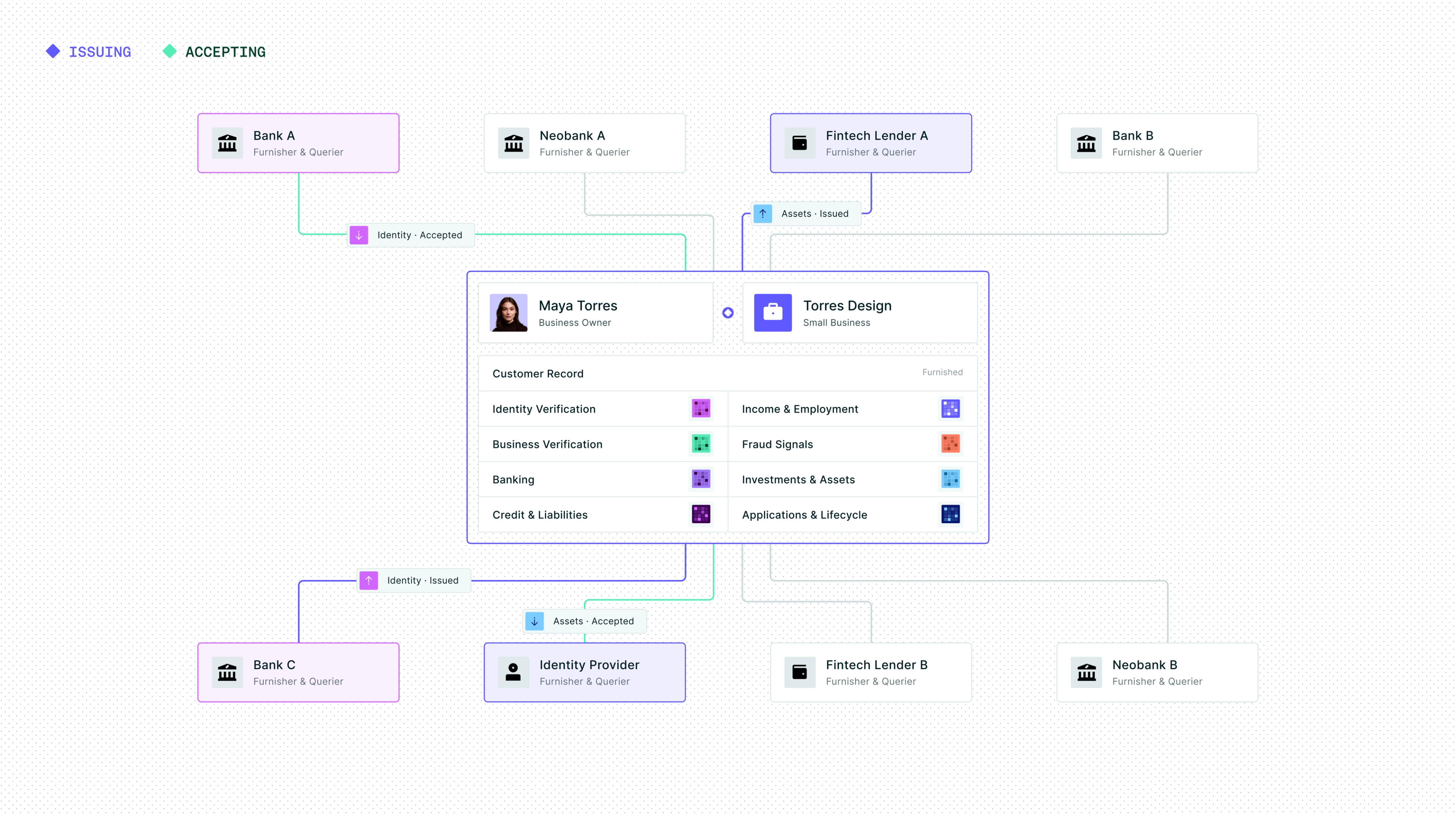
SOLO is working with 240+ fintech programs and sponsor banks to operationalize reliance products, like KYC certificates that serve as a fast pass for consumer onboarding, across the fintech and banking ecosystem. The Scorecard was designed specifically for those programs identifying and measuring the impact of reusable verification work on their customer experience and top of funnel metrics.
We hear the question constantly: why do we need to rethink open banking?
This cohort substantiates what much of the industry has felt: the current open banking solutions don’t work in practice.
Every provider other than Bank of America offered account integration to fund the new account. Those integrations appeared seamless and then repeatedly failed. The customer did the work of connecting the account, repeated the connection attempt when it broke, and finally resorted to a manual connection anyway — roughly tripling the tasks in that single step. At PNC, where no manual fallback existed, it ended the application.
The permissioning was worse than the reliability. When a third-party connection did succeed, it was an all-or-nothing share of all of our data — not necessarily to the new banking provider, but to the third-party service sitting in the middle. The only way for a customer to revoke that sharing was to go back to the original bank and revoke it there. There was no clear data management with the third party, and none with the new banking platform that told us to use them.
As the laws change and start to require more fintechs to KYC their customers, operators have to prepare their experiences for more customer-intensive required tasks — ID document capture, biometrics, liveness checks — and understand how those tasks land against the unit economics of their funnel.
One insight that can be applied is the reality of delayed friction on the conversion of an account. This cohort provides evidence that 30% of users may never complete a follow up task in order to make or keep their account active.
Operators may strategize on sequencing, timing CIP tasks to a user's activity level or their incentive to finish them. Regardless of how a fintech chooses to game the requirements within their experience, a new level of compliance rigor is coming, and fintechs need a plan to meet it without giving up their conversion experience.
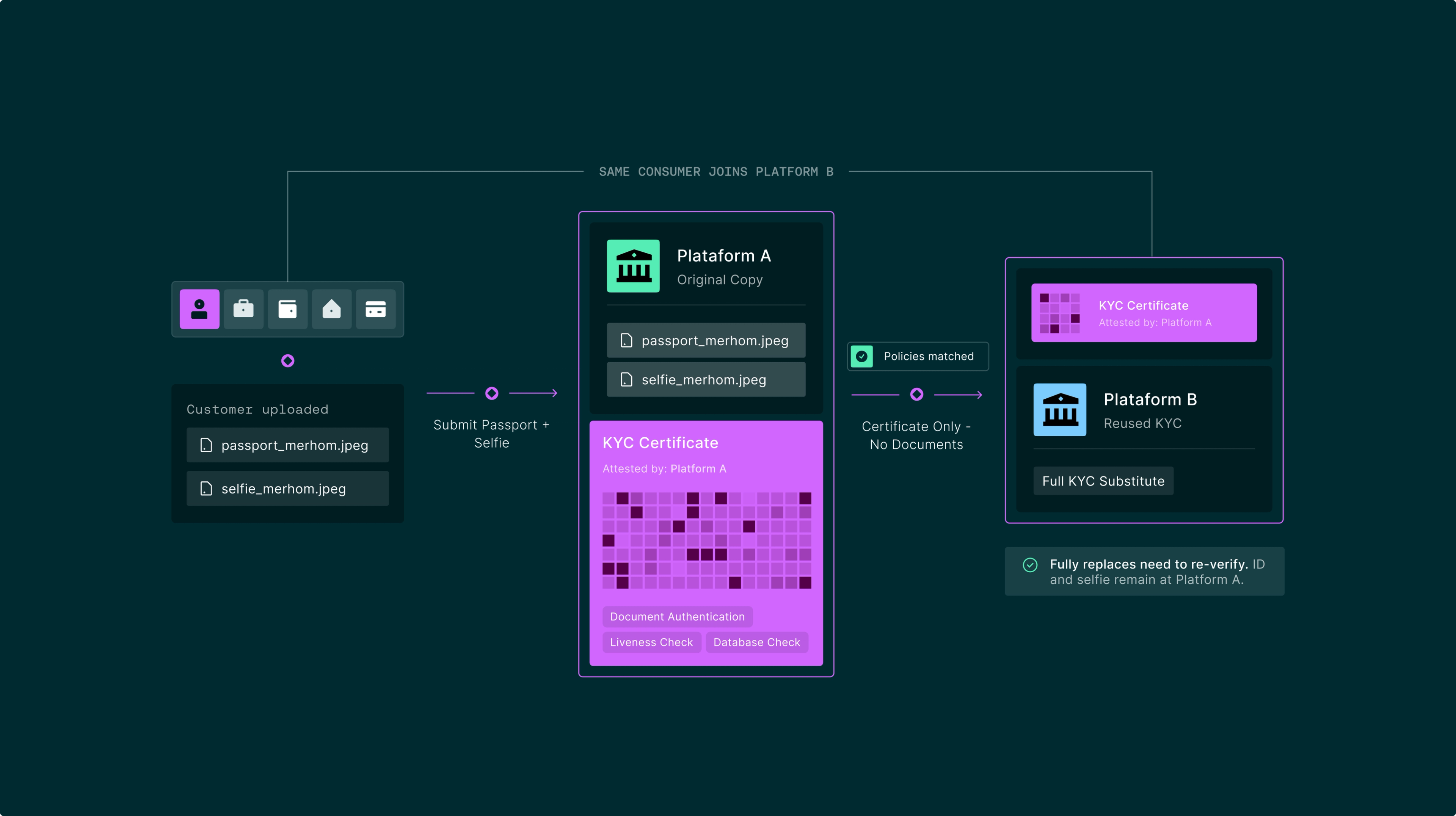
KYC certificates are a solution for fully fulfilling a CIP policy without requiring a customer to perform those steps within their onboarding workflow. Certificates function like a TSA PreCheck at onboarding. The customer gives you a few identifying fields, consents to share what exists, and the previously completed verification steps disappear from their application path — document capture, biometrics, the selfie and liveness check. All removed. On the back end, the fintech and their sponsor bank receive the examiner-ready artifacts needed to trust work that was already performed.
Certificates are bank-attested sets of reliance artifacts that let you skip KYC steps another network member already completed, when their bank attests to it and it matches your policy.
Leveraging KYC certificates to meet CIP requirements means that an application doesn’t have to delay customer onboarding friction with the hope that a customer is motivated enough to come back and finish the tasks that keep their account active. CIP is instead satisfied in a way that feels to the customer like breezing through the application. Zero friction for the customer, full reliance for the bank or fintech onboarding them.
Certificates are available to all regulated banks.
Due to the sponsor bank's role in creating and accepting certificates, only fintechs whose sponsors participate in the network are eligible to implement certificates.
Interested fintechs and sponsors may meet with SOLO to determine eligibility for certificate furnishing and use.
Every provider in this cohort will receive their full scorecard: the category breakdown, the field-level count, the funding path analysis, and the specific steps that could be pre-filled for their customers with network certificates that already exist.
If you weren't in this cohort and would like a diagnostic of your own application process, request your scorecard below.
| 9/15 |
| PNC | 32/50 | 5/10 | 10/10 | 7/15 |
| 9:20 |
| 13:00 |
| PNC | 22 | 2 + behavior survey | 4:30, 10:01 to account access | Never Funded |